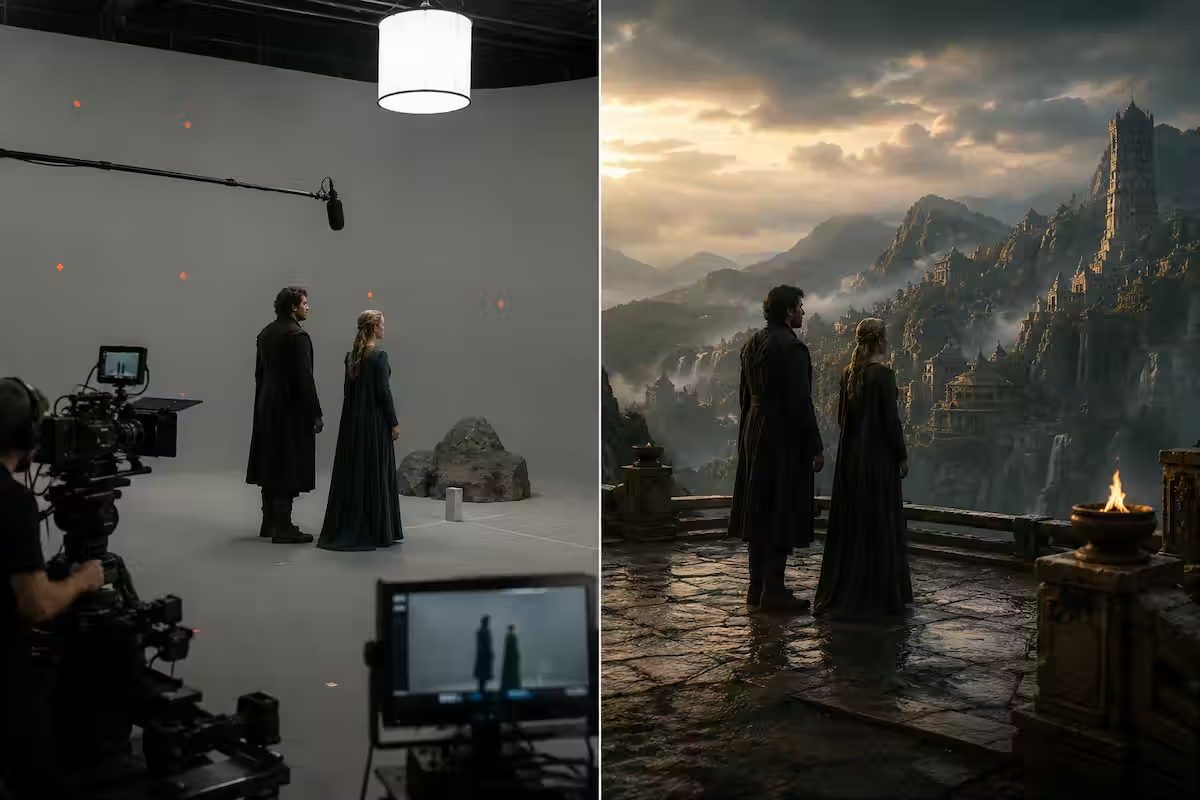
Ryan Kavanaugh’s Acme AI & FX is positioning its gray-stage production model as a way to reduce the cost and complexity of making ambitious original films.
The company’s core pitch is straightforward: keep live actors, directors and department heads in the process, but move much of the physical production burden into a controlled stage environment and post-production pipeline. Performers are shot on a gray stage with practical props and partial set pieces, while backgrounds, lighting and wider environments are generated around the captured performances.
The first major test case is Bitcoin: Killing Satoshi, a Doug Liman-directed thriller starring Casey Affleck, Gal Gadot, Pete Davidson and Isla Fisher. According to reporting from TheWrap, the film wrapped principal photography in London after a 20-day shoot on a custom-built soundstage. Producers said the approach allowed them to make a film they estimated would have cost more than $300 million through traditional methods for a reported budget of about $70 million.
That makes Acme’s model relevant to one of the industry’s most persistent problems: the shrinking space for expensive, original, non-franchise films. Location shooting, travel, permits, construction, weather delays and large physical departments can make mid-budget ideas hard to justify. Acme’s argument is that a controlled stage and AI-generated environments can remove enough friction to make those projects more viable.
The company has also been careful to frame the system as a production tool rather than a replacement for creative labor. TheWrap reported that Bitcoin: Killing Satoshi used traditional department heads, wardrobe, props, production design and live performances, with post-production involving AI artists rather than fully automated generation. That distinction matters in an industry still wary of AI’s effect on jobs, rights and creative control.
Still, the model raises questions MSR readers should watch closely. Cost claims made around a single film do not automatically translate across genres, budgets or production cultures. The process may work best for projects with many locations, controllable performance needs and enough post-production time to refine the generated world. It may be less useful where real locations, natural light, complex physical action or traditional craft are part of the value.
Acme AI & FX is also reportedly working on other projects, including Adam Shankman’s Stop That Train, and has a broader film and television pipeline. If those productions show repeatable savings without obvious creative compromises, the company could become an important case study in AI-assisted production economics.
For now, the useful takeaway is not that AI has “solved” film production costs. It is that gray-stage workflows are moving from demo territory into real feature production, with experienced filmmakers and recognizable casts attached. The next test is whether audiences, buyers, crews and insurers accept the results once the finished films are seen.