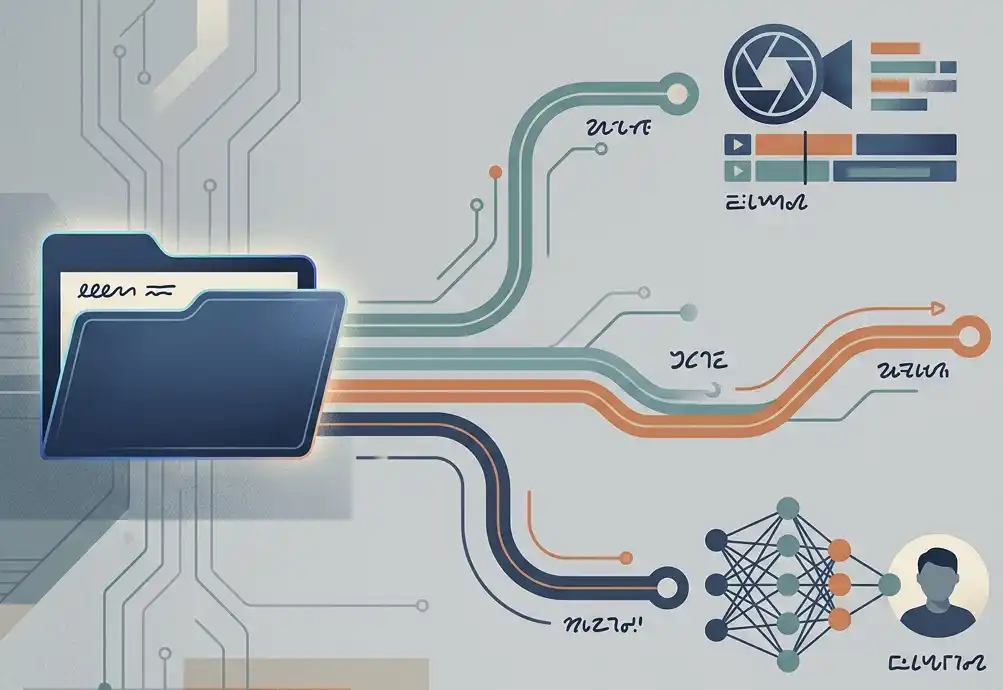
For production teams, the harder AI video question is no longer “which generator looks best in a demo?” It is where each tool belongs in an actual job.
One model may be useful for a short photorealistic concept shot. Another may be better for turning a still frame into motion. A third may matter because it sits inside a familiar creative suite, carries clearer commercial-use promises, or gives developers an API they can connect to an internal asset system. None of that makes a synthetic clip production-ready by itself. It does make tool choice an operational decision.
That is the missing piece in many AI video discussions. The market is not settling into one neat engine. Runway is selling consistency across characters and locations. Google is pushing Veo around native audio, dialogue and prompt control. Adobe is positioning Firefly around commercially safer training sources and integration with creative workflows. Aggregators and developer platforms are wrapping multiple models behind one interface or API.
In practice, that means teams may need a simple routing plan: which tool is approved for concept frames, which for test motion, which for social derivatives, which for localization experiments, and which should never be used with client-owned material. “Use the best model” is not a workflow. It is a Slack argument with a render bill.
The immediate risk is messy handoff. Prompts, reference images, temp audio, generated clips and approvals can end up scattered across browser tools, personal accounts and download folders. That makes version control harder. It also makes rights review harder, because the legal position may depend on which service created the asset, what inputs were used, whether a performer likeness was involved, and whether the output needs disclosure or provenance metadata.
The cost story also needs restraint. AI video can be much cheaper than a shoot for some narrow jobs, especially internal training, marketing variants, rough previsualization and social formats. That does not translate cleanly to filmed drama, premium commercials, live-action performance, or anything requiring exact continuity, licensed characters, union talent, controllable lighting and final-grade deliverables. A 90 percent saving is not a universal law. It is often the difference between making a different kind of asset and not making the original one.
There is a vendor-risk angle too. Models improve quickly, but access, pricing, safety rules and product packaging also move quickly. A team that builds a repeatable workflow around one service should know what happens if that service changes terms, removes a feature, blocks a class of prompts, or is replaced by a newer model with different inputs and outputs.
The sensible response is not to build a grand AI video command centre. It is to document the boring bits early: approved tools, allowed inputs, ownership rules, review steps, naming conventions, storage location, disclosure policy, and who signs off before generated material leaves the sandbox.
AI video may eventually become routine production plumbing. At the moment, it is still a collection of impressive machines with different manners, prices and legal baggage. The team with the best pipeline may not be the one chasing every demo. It may be the one that knows which demo is allowed anywhere near the project folder.