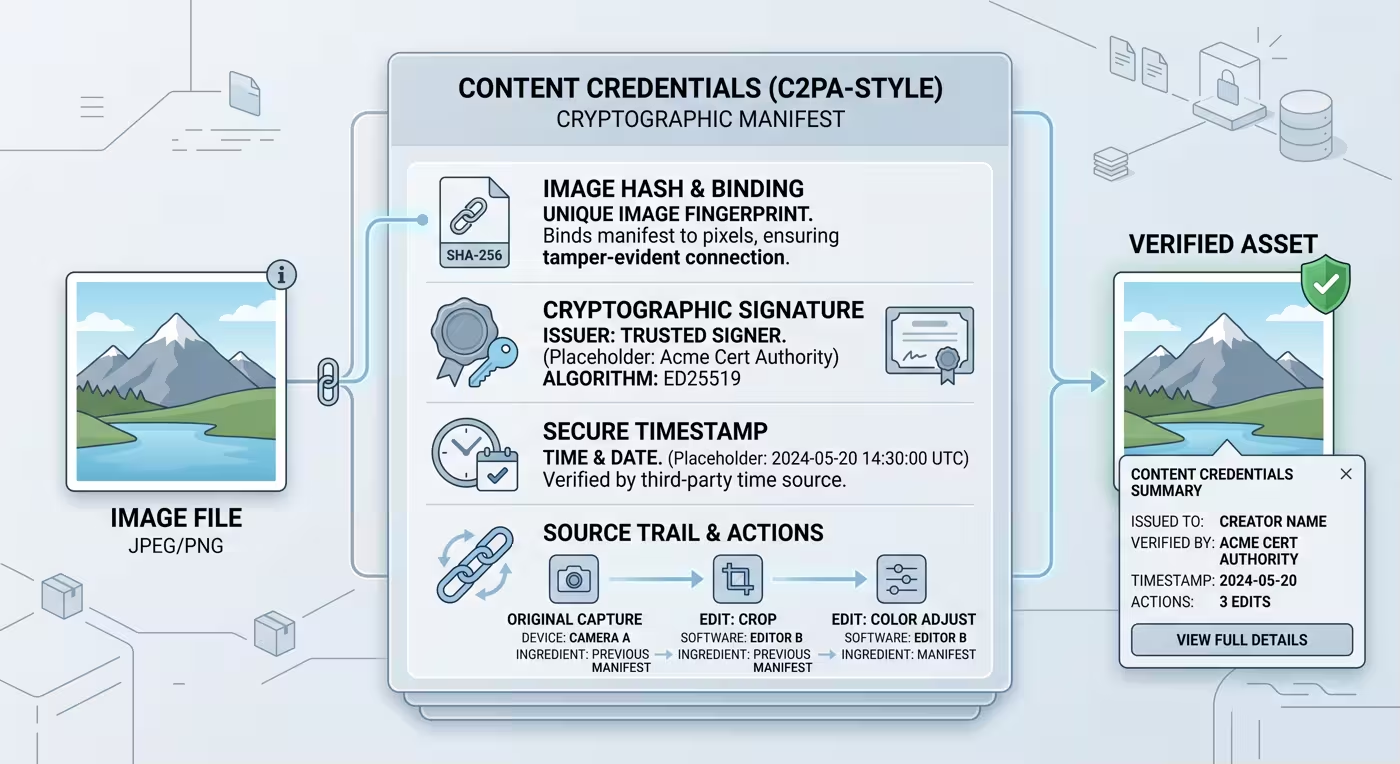
OpenAI has launched a public verification tool that lets users upload an image and check whether it carries provenance signals associated with the company’s AI systems.
The tool, available through OpenAI’s verification page, looks for two types of evidence: C2PA Content Credentials and Google DeepMind’s SynthID watermarking. If either signal is detected, the tool can indicate that the image likely originated from OpenAI tools such as ChatGPT, Codex or the OpenAI API.
For media companies, the significance is not that AI detection has been solved. It has not. The useful development is more practical: provenance is starting to move from abstract standards work into public-facing tools that producers, post teams, legal departments, platforms and journalists can actually use.
C2PA provides signed metadata that can travel with a file and describe where it came from or how it was created. That can be valuable in formal media workflows, but metadata can be stripped by uploads, downloads, screenshots, resizing and file conversion. SynthID takes a different approach, embedding an invisible watermark into the image itself. OpenAI is using the two together because each covers some of the other’s weaknesses.
The reality check is important. OpenAI’s verifier is not a universal AI detector. It is currently designed to detect supported provenance signals from OpenAI-generated images, not images created by other AI models. A clean result does not prove that an image is real, human-made or legally safe to use. It may simply mean that the relevant signal is missing, degraded, stripped, unsupported or from another system.
Even with those limits, the launch matters. As AI-generated stills, concept art, marketing images and synthetic production assets become more common, media companies will need better ways to track where files came from and what systems touched them. OpenAI’s tool is an early step toward that kind of chain-of-custody layer, but it should be treated as one signal in a broader verification process rather than a final answer.