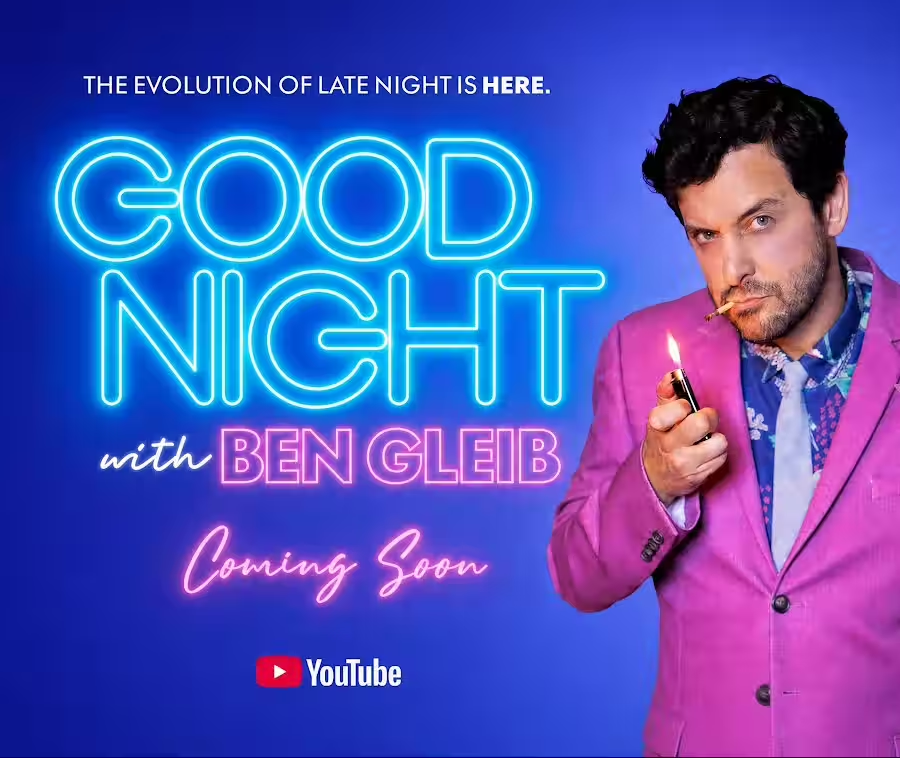
Ben Gleib is set to launch Good Night with Ben Gleib on YouTube on May 28, presenting the show as a digitally native take on the late-night talk format. The launch arrives just days after The Late Show with Stephen Colbert aired its final episode on CBS, closing out a long-running broadcast franchise that the network said it was retiring for financial reasons.
The timing gives Gleib’s project a useful industry backdrop. Traditional late-night television remains built around expensive studios, large staffs, fixed time slots and network economics. Good Night with Ben Gleib is being framed very differently: a YouTube-first show with a home-studio base, social-native distribution and production support from Gotham Production Studios and the Gotham Network.
For MSR readers, the important point is not whether one YouTube show can replace network late night. It is what the production model suggests. A talk format no longer needs to begin with a broadcast slot, a network studio or a full legacy infrastructure. It can be built around a creator’s existing audience, a smaller physical footprint, remote or hybrid production, platform analytics and monetization that extends beyond a single nightly airing.
That shift matters for producers, commissioners and media companies because it changes the cost-risk calculation. A late-night-style show made for YouTube can test segments quickly, adjust to audience data, produce clips for multiple feeds and build sponsorship or advertising packages around measurable engagement. It also puts more pressure on production teams to think beyond the full episode: the show, the clips, the shorts, the guest moments and the audience interaction all become part of the format.
There are limits. A home-studio YouTube show does not automatically deliver the polish, booking power or cultural reach of a major network franchise. The “first” label should also be treated as promotional framing rather than a settled industry fact. But the project is still a useful signal. Late night has always been a production-heavy genre. If even part of that grammar can move into a leaner, platform-native workflow, the implications extend well beyond comedy.
The next thing to watch is whether Good Night with Ben Gleib behaves like a traditional talk show placed on YouTube, or whether it genuinely uses YouTube as the format’s operating system. The difference will determine whether this is a novelty launch or a small but meaningful blueprint for lower-cost entertainment formats built outside the network pipeline.