Volumetric Capture
A production technique that uses an array of synchronized cameras to record a subject in three dimensions, creating a true 3D model in motion.
Quick Decoder
Plain-English Definition
Volumetric capture is a way of recording a real person, object or space as moving 3D data rather than as a flat video image.
Main Analysis
What it actually is
Volumetric capture is a way of recording a real person, object or space as moving 3D data rather than as a flat video image.
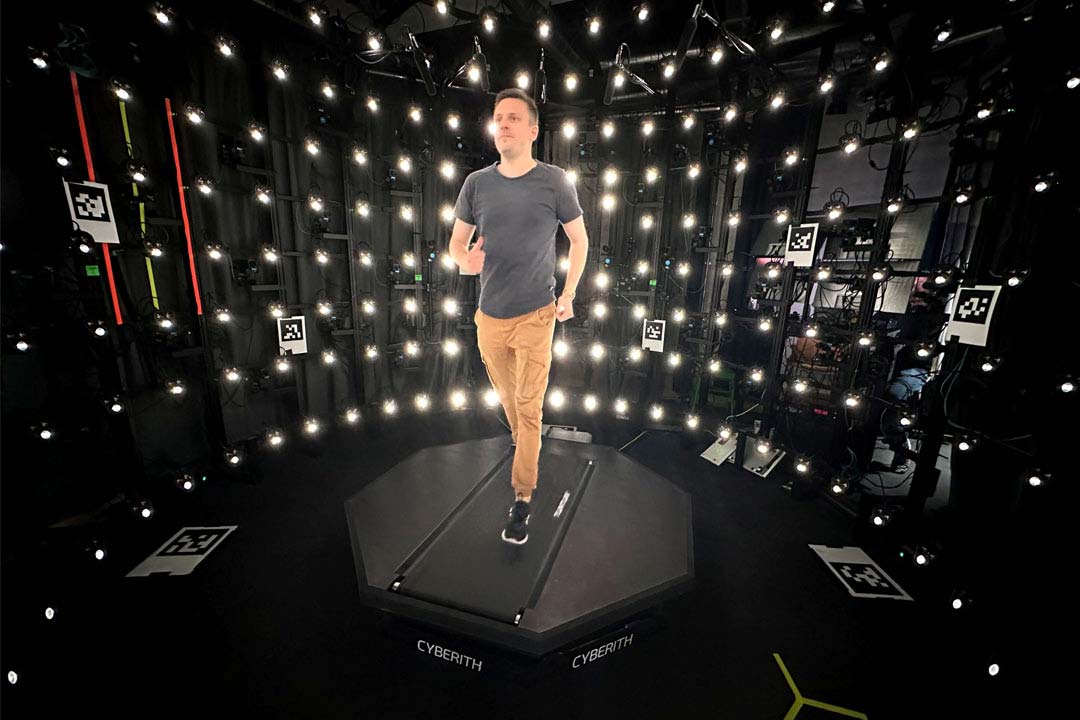
Instead of one camera filming a performer from one angle, a volumetric stage uses multiple synchronized cameras, usually arranged around the subject. Those cameras record the performance from many viewpoints at the same time. Software then reconstructs the result as a 3D asset that can be viewed, placed and moved around inside a game engine, virtual production system, augmented reality experience or immersive headset.
The important difference is not just that the image looks three-dimensional. It is that the viewer, director or system is no longer locked to the original camera position. A captured performer can be seen from different angles after the fact. That is the promise, at least. As ever, the promise arrives before the convenient workflow.
How it differs from motion capture
Volumetric capture is often confused with motion capture, but they are not the same thing.
Motion capture records movement, usually from markers, suits, cameras or sensors, and applies that movement to a digital character. It is about performance data. The final character may be animated, stylized, realistic or entirely imaginary.
Volumetric capture records the appearance of the performer as well as the movement. Clothing, hair, face, body shape and surface detail are captured as part of the performance. The result is closer to a moving 3D scan of a real person.
That can be powerful when the point is to preserve a recognizable performer, presenter, athlete or witness. It is less useful when the plan is to create a fully controllable digital character. Once a performance has been volumetrically captured, it is not as easy to re-pose, relight or rewrite as a conventional CG character. You have captured the take. Congratulations, you have invented a very expensive kind of commitment.
Where it fits in media workflows
For film and television, volumetric capture sits somewhere between production, VFX, virtual production and immersive media. It is not a simple replacement for normal cameras, and it is not just another post-production plug-in.
The most obvious uses are in mixed reality, virtual reality, augmented reality and interactive experiences, where a viewer may move around a captured person or performance. It can also be useful for sports, music, branded entertainment, museums, training and promotional material where the appeal is the feeling of presence: a person seems to be there in the space with the viewer.
In production and post, the value is more selective. A captured performer might be inserted into a 3D scene. A presenter, expert or actor might be recorded once and then placed into different digital environments. A director might be able to choose some framing decisions after capture, within limits. A set, prop or location can also be scanned volumetrically or through related photogrammetry workflows. Photogrammetry means building a 3D model or scene from many real-world photos.
This is why volumetric capture often turns up in the same conversation as virtual production. Virtual production joins physical filming with real-time digital environments. Volumetric capture can provide real-world people or places as 3D ingredients for those environments.
Why people are talking about it now
The idea is not new, but several things have made it more relevant.
Game engines are now normal production tools, not just game tools. Headsets and spatial displays have improved. Cloud processing and storage are more available. AI-assisted reconstruction is making some 3D capture workflows more practical. At the same time, producers are looking for ways to reuse performances, create interactive material and make more assets from each shoot.
There is also a broader shift in how media companies think about captured material. A traditional video file is mostly finished once it is edited and delivered. A 3D captured performance can become an asset. It might be used in an AR app, a virtual event, an interactive marketing piece, a training module or a future immersive platform that nobody has quite persuaded normal people to use yet.
That asset logic is attractive. It is also where rights, consent and archiving questions start to matter.
The catches
Volumetric capture is still a specialist workflow.
High-end capture stages require a lot of cameras, controlled lighting, calibration, processing, storage and technical supervision. The files can be huge. The capture environment can be restrictive. Shiny materials, loose hair, transparent fabrics and complex motion can cause problems. The resulting asset often needs cleanup and optimization before it can be used smoothly in real-time systems.
There is also a creative limitation. Volumetric video gives you freedom to move around a captured performance, but it does not give you infinite freedom. You cannot treat it exactly like a fully rigged CG character. If the actor did not turn their head, change expression or deliver the line differently, the capture will not magically provide that option. There are tools that can help, but that moves the workflow into another set of costs and compromises.
For mainstream TV production, that means volumetric capture is not something to casually add because it sounds futuristic. It needs a reason. A viewer needs to benefit from the 3D nature of the capture. Otherwise a well-shot 2D video will usually be cheaper, simpler and better understood by every department.
Rights and consent
Volumetric capture raises more sensitive questions than ordinary footage because it can create a reusable 3D likeness of a person.
That likeness may be placed into environments the performer never stood in, reused after the original project, or combined with interactive and AI tools later. Contracts need to be clear about where the capture can appear, how long it can be used, whether it can be modified, whether it can train or feed other systems, and what approval rights exist.
This is especially important for talent, presenters, athletes and public figures. It is also relevant for background performers and non-professional subjects. If a production captures someone as a 3D asset, “we only used the footage” may not be a very comforting explanation later.
Is this hype or not?
Volumetric capture is real, useful and technically impressive. It is also easy to oversell.
For immersive experiences, interactive installations, virtual production experiments, sports presentation, training and certain VFX-adjacent workflows, it can do things conventional video cannot. For ordinary scripted television, documentary or entertainment production, it is still more likely to be a specialist tool than a default method.
The sane way to think about it is not “the future of filming.” It is a capture option for cases where 3D presence matters enough to justify the added cost, planning and technical overhead.
The takeaway
Volumetric capture matters because it changes the recorded performance from a flat image into a spatial asset. That can open up new creative and commercial uses, especially where viewers, directors or systems need to move around the subject.
But it is not magic video, and it is not automatically more useful than a camera. The best projects will start with a clear question: why does this need to be captured in 3D? If the answer is strong, volumetric capture can be remarkable. If the answer is “because it sounds modern,” the budget department may wish to have a word.