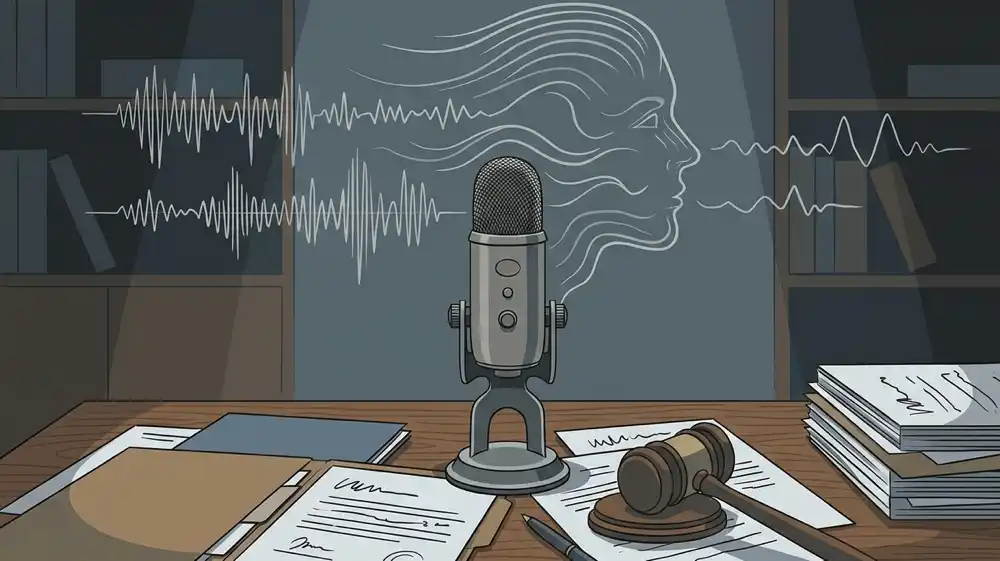
The NO FAKES Act has cleared the Senate Judiciary Committee, moving a federal AI voice and likeness bill closer to the Senate floor. It is not law yet, which is the small but important phrase that should stay attached to every compliance memo for now.
The bill, formally the Nurture Originals, Foster Art, and Keep Entertainment Safe Act, is aimed at unauthorized digital replicas: highly realistic synthetic versions of a person’s voice or visual likeness. For studios, streamers, broadcasters, producers, post houses and localization vendors, the practical issue is consent. A cloned voice, synthetic presenter, digital double, posthumous performance, AI-translated dub or altered recording may need a clearer chain of permission than many workflows currently assume.
According to the bill’s sponsors, the legislation would give individuals a federal right to authorize the use of their voice and likeness in digital replicas. It would also create liability for distributing unauthorized replicas, establish notice-and-takedown obligations for online services, add a counter-notice process for disputed removals, and largely preempt future state laws covering digital replicas.
That matters because voice and likeness rights in the U.S. are currently handled through a patchwork of state publicity laws, contract terms, union rules, platform policies and copyright-adjacent claims. The NO FAKES Act would not replace copyright law. It would sit beside it, aimed at the person being replicated rather than the underlying script, song, recording, footage or photograph.
For production and post teams, the likely workflow change is less glamorous than the phrase “AI deepfake law” suggests. Business affairs would need to know when a performer’s voice or face is being replicated, altered or extended. Localization teams using AI dubbing or voice conversion would need tighter consent records. Marketing teams using synthetic endorsements or revived archive material would need to check whether likeness rights have been licensed. Platforms and distributors would need takedown handling that looks closer to copyright operations, but with a different legal trigger.
The bill includes carve-outs for uses such as news, parody, commentary, education and research. Those carve-outs are important, because synthetic likeness rules can easily collide with documentary, satire, historical drama, games, criticism and ordinary visual effects work. The revised bill also adds a counter-notice process, a sign that lawmakers know takedown systems can remove lawful speech as well as unlawful material.
Supporters include SAG-AFTRA, the Motion Picture Association, the Recording Academy, the National Association of Broadcasters and several technology companies. Their argument is straightforward: performers, musicians, presenters and ordinary people need a national remedy when their voice or image is cloned without permission.
The opposition is not imaginary. The Entertainment Software Association has warned that the bill could create uncertainty for games, avatars and realistic fictional characters. Civil liberties groups have raised free-expression concerns. Those objections do not make the bill irrelevant to media companies; they make it more important to read the definitions closely before treating it as a clean new rulebook.
The next step is a possible Senate floor vote. Until then, the sensible move for media companies is to audit where synthetic voice, face replacement, AI dubbing, digital doubles and archive-based replicas are already entering the workflow. The law may still change, but the paperwork problem has arrived early.