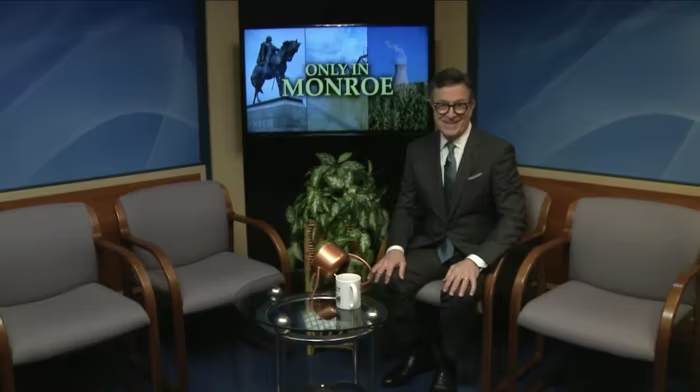
Paramount has suspended copyright takedown notices on unofficial YouTube uploads of Stephen Colbert’s surprise appearance on Only in Monroe, after the company was accused online of trying to suppress the former CBS late-night host’s return to television.
The episode aired on Monroe Community Media in Michigan 24 hours after Colbert ended his run on The Late Show. Colbert had previously used the same public-access program as a comic launchpad before taking over CBS’s late-night slot in 2015. This time, the hour included Jack White, Jeff Daniels, Steve Buscemi, Eminem and Byron Allen, whose Comics Unleashed is taking over Colbert’s former CBS time period.
After the episode began spreading through third-party uploads and clips, Paramount issued takedown notices against unauthorized versions. The company later said the notices were standard copyright enforcement rather than an attempt to bury the special, and suspended the effort while reviewing the situation.
The confusion is the point. To a rights department, an unofficial upload of company-backed content can look like routine piracy. To fans, journalists and online audiences, a takedown notice against a public-access Colbert stunt looked like corporate censorship, especially given the political attention around the end of his CBS run.
For media companies, the episode is a useful rights-management case study. Strict enforcement may protect ownership in the narrow legal sense, but it can also damage the value of a moment if the audience sees sharing as part of the event itself. Viral distribution is often messy, unofficial and badly timed for traditional windows. It is also where much of the attention now lives.
The practical lesson is not that rights holders should ignore piracy. It is that unusual, high-goodwill moments need a different response path from ordinary content theft. A network or studio may still want to steer viewers toward an official upload, but the first move cannot always be an automated or reflexive takedown campaign.
The incident also hints at a broader shift for late-night and personality-led programming. Colbert’s post-CBS appearance moved across local access TV, YouTube clips, fan uploads and social discussion almost immediately. That kind of distribution is difficult to control, but it can extend the life of a one-off event far beyond its original broadcast.
For executives, the takeaway is simple: copyright enforcement is now part of audience strategy. The right question is not only “do we own this?” but “what happens to the audience, the talent relationship and the story if we enforce ownership right now?”