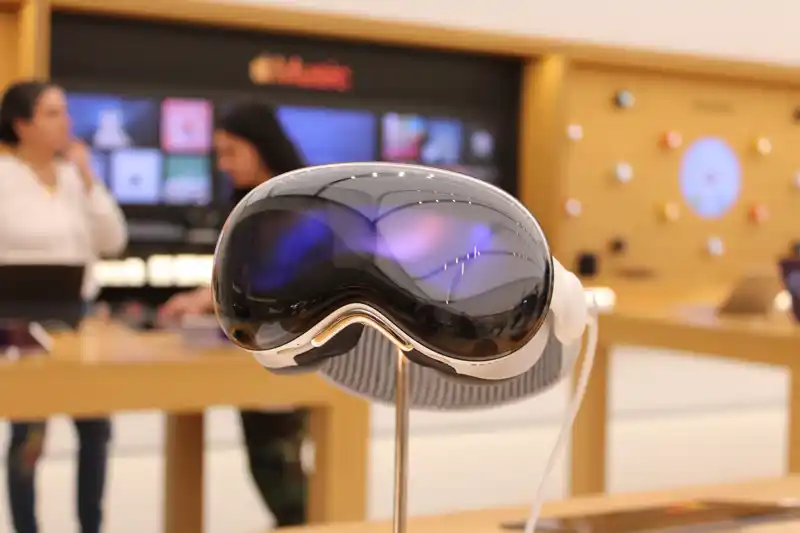
Apple has added new capabilities to Apple Immersive Video, the company’s high-resolution spatial video format for Apple Vision Pro, with updates aimed at live production, wider playback and more efficient streaming.
The most relevant change for media teams is Apple Immersive Live. According to Apple’s WWDC26 developer material and CineD’s report, the live pipeline is designed to work with professional broadcast infrastructure built around SMPTE ST 2110, the IP video standard used in many modern broadcast facilities. The system is intended to carry ProRes video, Spatial Audio and calibrated lens metadata before encoding the finished stream for Apple’s immersive playback format.
That matters because immersive video has often looked less like a normal production format and more like a specialist science project with excellent lighting. Live support does not make it simple, but it gives broadcasters and event producers a clearer route to experiment with sports, concerts and other real-time programming without inventing every part of the pipeline from scratch.
Apple is also expanding playback support beyond Vision Pro through its Immersive Media Support framework, allowing Apple Immersive Video content to be played on iPhone and iPad. That does not turn an iPhone into a headset, and the full experience still depends on Vision Pro. But it could make immersive projects easier to review, promote and distribute across Apple devices instead of being locked entirely inside the headset audience.
The other important technical update is static foveation for distribution. Foveation means concentrating more image detail where the viewer is most likely to notice it, rather than treating the whole image equally. Apple says static foveation can make 8K-per-eye immersive material streamable using a 4K frame size by preserving more pixel density in the most important part of the image. In plainer terms: it is a bandwidth trick, but a useful one.
The caveat is reach. Apple Immersive Video remains tied to Apple’s ecosystem, and the installed base for Vision Pro is still small compared with conventional screens. These updates make the production and delivery story more credible, especially for live events, but they do not yet prove that immersive video will become a regular broadcast business rather than a premium experiment.
For studios, sports producers and live-event companies, the sensible response is probably not to rebuild the truck around Vision Pro. It is to watch where Apple, Blackmagic and early production partners put the format next, and whether live immersive coverage can move beyond impressive demos into repeatable jobs with paying audiences.