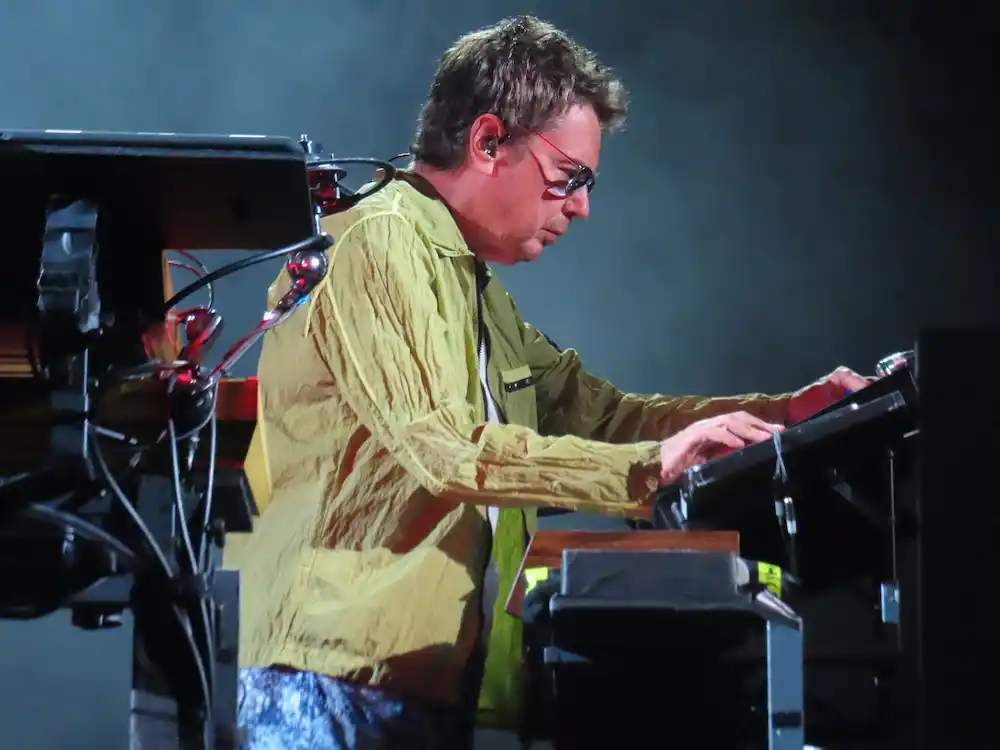
Jean-Michel Jarre is calling for artists to be treated as commercial partners in generative AI, not merely as raw material for model training.
The electronic music pioneer’s position sits in the middle of a growing creative-industry argument. Jarre has been broadly supportive of AI as a creative tool, describing it in recent interviews as a new instrument rather than a replacement for human talent. But he has also argued that copyright, consent and compensation need to be rebuilt for an era in which models can be trained on vast libraries of creative work.
For media companies, the useful point is not only Jarre’s personal view of AI. It is the direction of travel in rights negotiations. As generative systems become more capable of producing music, images, voices, video and animation, the question is shifting from “can this be generated?” to “what was it trained on, who approved that use, and who shares in the value?”
That matters for film, television and streaming because AI-generated assets do not arrive free of rights risk. Music, voice, likeness, images, scripts, archive material and style references can all raise questions about permission, provenance and compensation. A licensing model that treats artists as commercial partners would add cost and complexity, but it could also give producers and platforms a clearer route to using AI tools without relying on legally uncertain training data.
The draft shape of that market is already visible in music, where some AI companies are pursuing licensed training data and revenue-sharing models rather than treating rights claims as an obstacle to work around. Those deals remain early and uneven, but they suggest that parts of the creative sector are moving from pure litigation toward negotiated AI supply chains.
The reality check is that Jarre’s comments do not amount to a settled framework. There is still no single standard for how artists should be compensated when their work contributes to AI systems, and the legal position varies by market, medium and use case. For producers and studios, that uncertainty is the operational issue.
The practical takeaway is simple: AI rights clearance is becoming a production-planning problem. Teams using generative tools will need to know not just what a model can create, but whether its training, inputs, outputs and commercial terms are safe enough for professional use.