What Is a Virtual Art Department?
A Virtual Art Department builds the digital worlds used in virtual production, from LED volume backgrounds to virtual scouting environments. Its real impact is less about shiny screens and more about moving creative decisions, budget and risk earlier in the production process.
Quick Decoder
Plain-English Definition
A Virtual Art Department is the team that designs and builds digital sets, locations and objects so they can be used during virtual production rather than only added later in post.
Main Analysis
What it actually is
A Virtual Art Department, usually shortened to VAD, is the team that designs and builds digital sets, locations and objects for virtual production.
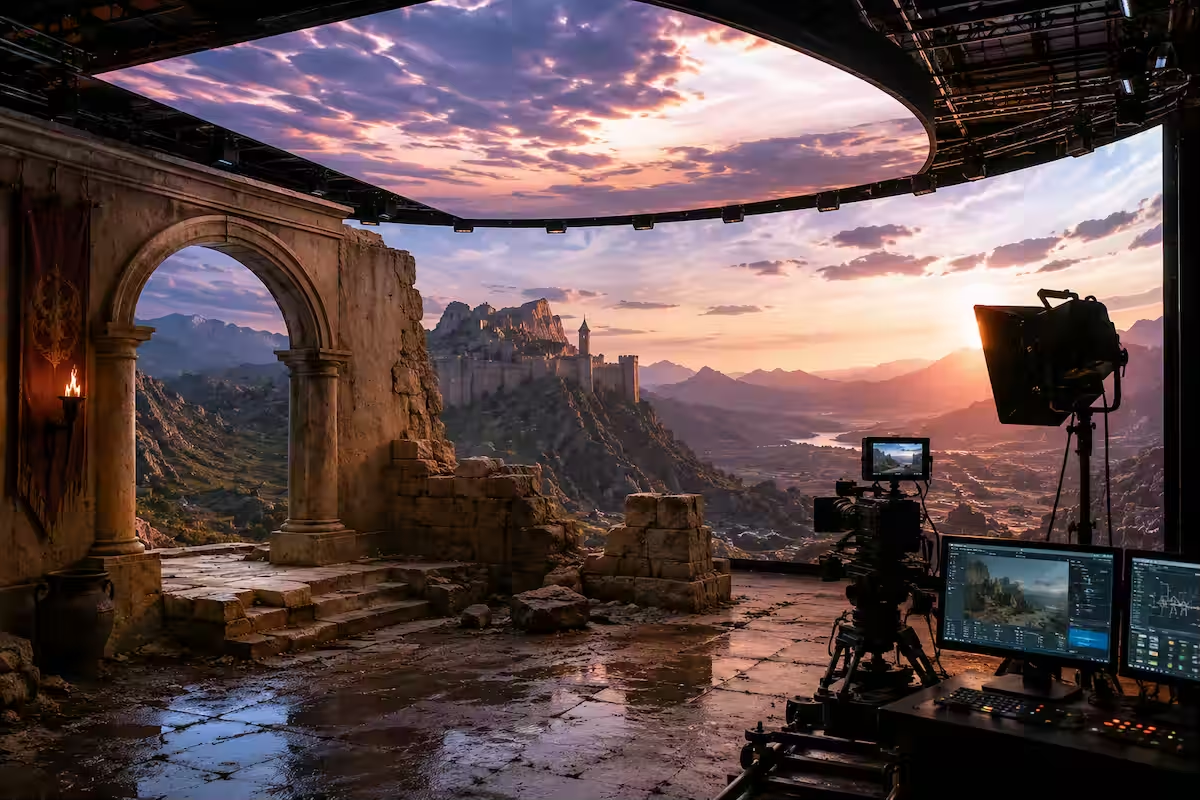
On a large LED volume shoot, the VAD may build the 3D environment that appears behind the actors on the wall. On another production, it may create a virtual location that the director and cinematographer can explore before anyone has built a physical set. It can also produce digital extensions that line up with practical scenery, props and lighting.
The simplest version is this: the traditional art department builds what the camera can physically see. The VAD builds the digital version of that world, often early enough that the production can plan with it instead of discovering problems six months later in post.
This is not just a prettier green screen. In a green-screen workflow, much of the final environment is imagined on set and created later. In a VAD workflow, more of the environment is designed, tested and sometimes photographed in-camera during production.
Why people should care
The VAD matters because it moves some work that used to happen late in post-production into pre-production and production.
That changes who needs to be involved, when decisions must be made and where the money goes. A production that wants to shoot against a digital city, desert, spaceship or fantasy landscape on an LED wall cannot wait until editorial to decide what that world looks like. The world has to be planned, built, optimized and approved before the shoot day.
The upside is that the crew can sometimes see the environment while shooting. Actors are not performing to a tennis ball in a green void. The cinematographer gets real interactive light from the wall. The director can judge framing and background composition on the day.
The downside is that earlier decisions often mean earlier spending. A VAD can make a shoot more controlled, but it is not a discount button.
Where it fits in the workflow
A VAD usually sits between the art department, visual effects and virtual production team. It does not neatly replace any of them, which is one reason the whole area can become politically interesting before lunch.
The production designer still owns the overall look of the world. The VFX supervisor still has to worry about whether the digital material will survive the full pipeline. The cinematographer still cares about lighting, lenses and camera movement. The VAD translates those needs into usable digital environments.
In practice, that may involve concept art, 3D modelling, layout, texture work, lighting, technical optimization and real-time playback in a game engine such as Unreal Engine. A game engine is software built to render interactive 3D worlds quickly.
The VAD may also support virtual scouting, where the creative team inspects a rough or polished digital location before the shoot. If someone uses the term previs, they usually mean pre-visualization: roughing out how a scene may look before it is properly filmed or built.
What it is useful for now
The most obvious use is in-camera visual effects on LED volumes. The VAD builds the digital background, and the virtual production system displays the correct view behind the actors as the camera moves. Done well, the camera captures much of the final image during the shoot.
It is also useful where the physical set and the digital set need to meet cleanly. If an actor walks across a practical floor toward a digital corridor, the join has to make sense in scale, perspective, texture and lighting. Otherwise the seam gives the game away.
Another useful area is planning. Even if the final shot is not captured on an LED wall, a digital environment can help teams test blocking, lens choices, camera moves and lighting ideas before the stage is booked and the meter starts running.
Newer capture techniques are entering this conversation too. Photogrammetry means building a 3D model or scene from many real-world photos. 3D Gaussian splatting is a newer method for reconstructing realistic spaces from image or video capture. These approaches can help turn real locations into digital environments faster, but they still need technical work and creative approval.
Why it is getting attention now
Virtual production has become more visible because LED volumes, real-time engines and camera tracking have matured enough for serious production use. The VAD is part of the less glamorous machinery behind that.
There is also a business reason. Studios and producers are under pressure to make production more predictable. A VAD can, in some cases, reduce travel, weather risk, location complications or late-stage VFX surprises. It can also make a shoot more controlled, especially for dangerous, expensive or impossible locations.
The less comfortable reason is that it changes labor and departmental boundaries. If a digital set performs the role of a set, who owns it? The art department? VFX? Virtual production? A vendor? The answer may depend on the production, contract, country and union environment.
The catches
The big catch is that a VAD does not make virtual production cheap by default. It can shift cost rather than remove it. Instead of paying later for post-production fixes, the production may pay earlier for digital artists, technical directors, engine specialists, stage testing and asset optimization.
It also reduces some kinds of flexibility. If the background is captured in-camera, changing it later may be harder than changing a green-screen composite. The familiar phrase “fix it in post” does not disappear so much as move earlier, where it becomes “please fix it before the wall rental starts.”
There are technical catches as well. Real-time environments must run reliably on set. Beautiful assets that are too heavy to play back are not production-ready, they are expensive digital furniture. Camera tracking, color, reflections, frame rate, moiré and physical-digital alignment all have to behave at the same time.
Is this hype or not?
The VAD is not hype. The best version of it solves real production problems by giving filmmakers a more complete world earlier in the process.
The hype begins when it is sold as a universal replacement for locations, sets or post-production. It is not that. It is a specialized workflow that works best when the scene, budget, schedule and creative team are suited to early decisions.
For executives and production leaders, the sane takeaway is simple: a VAD is worth understanding because it changes the planning conversation. It can make some shoots more controlled, more visual and more predictable. It can also punish vague creative direction, weak prep and bargain-bin technical staffing with unusual efficiency.